الاثنين، 26 يناير 2015

Laâyoune Sahara City


It was in 1934 that Lieutenant Antonio de Oro established a camp on the left bank of Sèquia el Amra for the Spanish colonial police where the generous groundwater permit lasting installation.


In less than a century, Laayoune claimed as capital of an independent Sahrawi state, has skyrocketed, becoming the first economic and administrative center for Saharan Provinces.

Since the annexation by Morocco in Western Sahara in 1979, tax benefits granted to entrepreneurs and investors have allowed the momentum. The exploitation of phosphate mines of Bou Kra and treatment are not strangers. Phosphate is one of the main wealth of the kingdom. It is delivered on a conveyor belt (the longest in the world about 100km) directly to the port of El Marsa third Moroccan port 25 km from Laayoune where it is processed before being exported by ship

Downtown

INVESTMENTS These have most transformed the appearance of the city still remains the old cathedral in Spanish concrete. The center gathers around the vast square Méchouar all jurisdictions, banks and business locations.

These changes were complemented by the creation of cultural and sports venues. Theater, cinema, stadium, home to young people, schools, exhibition hall are also present to facilitate and better meet the needs of a settlement often still nomadic population.

Laayoune opens to tourism

Responding to the wishes of the new tourism directions provided on the Atlantic coast south of Morocco, seaside activities, relaxation and discovery of the hinterland have been implemented with a consistent range of varied leisure. + Continue reading ...

Apart from the water sports that appreciate the consistency of waves and wind, sport fishing or wholesale welcomes more and more fans on the long beach lined Foum El Oued dunes. Hunters will not be outdone, two protected game reserves were created. Hares, gazelles, partridges, bustards their are offered ...

Wild and varied landscapes.

The hinterland lends itself to the needs of travelers of all kinds hungry for wide open spaces. Excursions to the many salt lakes close to the coastal region, as Tah 70 km north of the city, are indeed organized from it. A great adventure to meet this rich and varied nature, made of regs and ergs along the coast and the charm of the region.

On the road to Smara, rock paintings sites Asli and Oued Miran give us, them, the testimony of a distant past when the Sahara was greener and humid, hosting a wide variety of animals. Located 250km, Smara is emblematic of a Saharan town rich past.

Step on the great south road

For many travelers, a city of Laayoune remains friendly and almost mandatory stopover in sub-Saharan Africa.

Place du MéchouarHowever, the strengths developed by the region show a willingness to be part of a tourism which hopefully, will be environmentally sustainable and respectful of the local population ...

Kasbah Agadir


port-d-agadir-1jardin-du-portugalbaie-d-agadir


Agadir was completely rebuilt after the earthquake of 1960, which makes this seaside city a modern city with recent infrastructure. Here no ancestral or historic kasbah medina but beautiful manicured gardens, contemporary museums and lively souks.

Kasbah Agadir

Vestige of the Agadir memory, Casbah was built in 1572 on top of the hill overlooking the city of Agadir. It remains today of this small fortress, following the 1960 earthquake, a long wall surrounding a buildable terrain. The view of the bay and the port of Agadir is exceptional in clear weather.

Birds Valley

In town the Birds Valley - 7/7 from 11h to 18h, free admission - is a zoo outdoor connecting Boulevard from 20 August to Boulevard Hassan II. Pleasant and convenient to reach a boulevard to the other, we find there a multitude of tropical birds and llamas, Barbary sheep, Barbary Atlas, dwarf goats ...

Garden of Portugal - Olhão-

Also called Garden of Olhão, nicely furnished and well maintained, the garden, which commemorates the signing of the cooperation agreement signed between fraternity and the city of Agadir and the Portuguese city of Olhão, is a small haven of tranquility Gadiris appreciated. 14.30-18.30.

Museum "memories of Agadir"

Attached to the Garden of Portugal, located on the corner of Avenue des FAR, this museum presents a touching exhibition of documents recounting the disaster of 29 February 1960: Photos of the missing city and other decision after the disaster, some articles release period and written accounts of some survivors. From 9am to 12.30pm - 15h to 18h, except Sunday. Free admission, tip the guide, talkative, funny and very friendly. Read the article

Port of Agadir

First fishing port of the Kingdom, the port of Agadir also has a shipyard and a new marina. Read the article


Agadir-The seaside town of southern Morocco

Housed in a large bay shaped crescent moon on miles of sand bordering the Atlantic, enjoying 300 days of annual sunshine and a temperate climate, Agadir is the main town beach in Morocco.

The beach is covered by a nice ledge where restaurants, leisure clubs, discos, casinos and hotels classified succeed it.

Horseback riding or camel on the beach, surfing and jet ski in the sea, golf, tennis and beach volleyball are among the leisure unavoidable during a stay in Agadir.

In the city center, boulevards August 20 and Hassan II are connected through the Valley of the birds, an open-air zoo, pleasant and convenient. Also, greens have been built and museums Agadir offer a cultural or historical exploration of the city and the region.

Tourism activity has naturally turned to water activities. Its tree-lined promenade along the long beach was completed a marina able to accommodate a number of increasingly important recreational boats.

Become an unavoidable resort in southern Morocco, she has developed a varied hotel infrastructure. While many luxurious resorts are concentrated in the sea, the wide avenues of the city center and the New Talborj area, among others, are home to many cafes, restaurants, hotels and guest houses, albeit more modest but no less welcoming.

In addition to this large number of varied accommodation and department stores, the city center has pleasant green spaces and museums. And the gardens of Izdaïen, Olhao, Portugal or garden, commemorating the twinning links between Agadir with the Portuguese city, it is adjoined by a museum dedicated to the memory of the cataclysm disaster. + Continue reading ...

The old medina was annihilated, its new large souk, Souk El Had was rebuilt a few kilometers from the center. As colorful and lively as his colleagues, with its 6000 shops it is a center of attraction and essential meeting for Gadiri.

Firmly turned towards the sea, Agadir has given itself the means to become the fishing port of Morocco's Atlantic coast. With a modern fleet, a trading port for efficient latest infrastructures is in it that is exported most of the agricultural production of the Souss Valley which it assumes the role with gusto capital.

A climb to the old Kasbah provides a unique view of this set. Old now ruined fortress overlooking the bay, she now contemplates an ever watchful eye promising developments facing the ocean.

But suddenly, February 29, 1960

February 29, 1960, in the night, a terrible earthquake struck the city of Agadir. Trembling of the deadliest land of the twentieth century it almost completely destroyed neighborhoods north of the river Tidli, making about 15,000 victims and burying under its rubble 90% of people in some sectors, around 30% of the population and as many wounded. Bloodless, this flourishing port city try to erase courageously trauma and irreparable scars left by this tragic event.

A few months later, just started Hauling of affected neighborhoods, the foundation stone was laid for the reconstruction.

The decision was made to start the work at 2km south of the destroyed areas Founti, the Kasbah and Yacheh located on seismic fault this.

Rebuilt a modern architecture, Agadir, now loses its typical town character in favor of a more modern appearance.

the surroundings

Agadir is not only the seaside city that we know, the hinterland is also suitable for many excursions.

Along the coast, towns and famous spots for surfing it deploys, the Sous Massa National Park is 65 km south as northeast Valley Imouzzer des Ida Outanane nicknamed 'Paradise Valley is considered one of the best excursions on the outskirts of Agadir. Taroudant imperial city of the Anti-Atlas or near Tafraout Ammeln the heart of the valley are open to you.

Tiznit-In the axis of the Anti Atlas, desert and sea?


with his belted medina walls around which has developed a modern city, Tiznit occupies a prominent place in the region.


At the crossroads of the ocean, the desert and the mountains, it connects the Souss Valley in southern Morocco and the foothills of the Anti Atlas to the Atlantic coast.

Tiznit, which dates back to 1882, is valued for its old Jewish quarter and its medina surrounded by ramparts, which with their 36 towers and 9 gates, more modest than those of Taroudant, but witnessed no less than its past as it has long been one of the major places of southern Morocco.

Visit Tiznit

In addition to its old quarters, Tiznit is also famous for its goldsmith craftsmanship. One can admire in the souk of jewelers, the Medina, the Jewish quarter, the rich Berber architecture made of pisés houses and walkways. The work of these artisans perpetuating an old craft heritage through the production of traditional Berber silver jewelery and brooches that have brought fame to the city.

Place Mechouar el adjacent to the medina is one of the key appointments in the city. Around this bustling plaza, many small cafes and traditional restaurants, call shops and cyber.

Medina has the distinction of including four quarters among whom is a spring called 'blue source'. While outside the city walls in the new town houses different departments and administrations. + Tiznit continue reading

The proximity to the ocean, with the beaches of Aglou and Mirleft known for the waves and fishing waters, and the Anti Atlas to Getaways cervical Kerdous Tafraoute and back country mountain landscape with warm, makes Tiznzit a nice step.

Explore the area

Fishing enthusiasts to start surfcasting and water sports will even Mirleft, a small town surrounded by steep cliffs, cove and sandy beach, about thirty miles. Mirleft is also a renowned surfing spot.

20 km from Tiznit, the small resort of Aglou-Plage has large white sand beaches, often deserted where swimming can be dangerous because of strong currents and a small natural harbor surrounded by a village fishermen.

The beautiful beach of Sidi mohammed-or-Abdallah, Mirleft, is certainly one of the most beautiful beaches of the south coast of Morocco with the whiteness of its sand and its many coves.

50 km north of Tiznit, the National Park Souss Massa is located at the mouth of the Oued Massa. This nature reserve is home to many varieties of birds: ducks, ibises, flamingos ... and salt.

tiznit-4The road that leads to cervical Kerdous (1100m) and Tafraoute winds through the Anti Atlas is a beautiful route, punctuated with small valleys and traditional villages in which to stroll and meet an ever smiling and friendly people .

Tan-Tan


The front Saharan job?


These are two white camels, giant, which welcome visitors at the entrance of the city ...

Already Guelmin south of 125km, it is a huge desert reg to be crossed to reach Tan Tan. The crossing of the Oued Draa really marks the end of the Anti Atlas geographically symbolizing the arrival in the Sahara south west Morocco.

For the adventurous, a ford is 8 km from the track to cross this river which Pliny the Elder said in his Natural History 'that' Darat Flumen 'was full of crocodiles.

After an arduous journey of nearly 500 miles across northern Moroccan Sahara, the Draa finally water, hard meandering through the dunes to complete its journey in the Atlantic.

A city, a port, but especially the beaches

You do not come in Tan Tan for sightseeing and lack of city beauty does not lend itself to the joys of the photo .. but to El Ouatia, Tan Tan Plage for some.

It is located 25 km from the town on the road to Laayoune. There is a shark medley standing on their fins welcome the traveler. The tourism program envisaged for the South of Morocco plans to make this port a seaside resort.

Opened in 1982 after five years of work, the main southern harbor sardine, one of its activities is the fish processing: canning units, freezing, shipping, processing provide employment to nearly 4,000 people.

Often tourists prefer El Ouatia in Tan Tan city as a stage on the road south. Despite its services, hotel capacity is minimal while the arrival of the fishing boats ensures sought animation. Nearby beaches encouraging idleness, ocean rollers are an invitation for surfers.

Fun and Culture

+ Continue reading ...

Tan Tan became over editions a major destination for the Sahrawi tribes. they can continue to express the rich nomadic culture that tends to wane with the settlement and urban mirage.

Following the regional tensions caused by the annexation of Western Sahara by Cherifian kingdom in 1979, moussem Tan Tan was banned for 25 years, not resuming until 2004. It was in 2008 that Unesco's godmother moussem include this great event nomadic intangible cultural heritage, reinforcing the process of Tan Tan to promote and maintain these traditions dear to the Saharan life.

Thanks to its cultural past, moussem Tan Tan is considered the most important meeting in this northern nomadic western part of the Moroccan Sahara. Modeled on the farming pace of Sahrawi tribes, meetings were traditionally held around the month of May.

This is especially since 1963 that this gathering has really taken the form of a moussem great fair stands for meetings, wedding ceremonies, sales and purchasing, family or tribal alliances, exchanges both commercial cultural.

The Venus of Tan Tan, an archaeological curiosity

Like many places in the Moroccan Sahara Tan Tan interested archaeologists. Indeed, it was in 1999 that a German researcher Lutz Fiedler discovered the enigmatic statue on the north bank of the Draa, near Tan Tan. Containing traces of red ocher pigment to it dates from the period of the Acheulean or there about 300 000 years.

6 cm long, quartzite rock, some interpret as a human representation devoid of face. For its discoverer and others, it might have been created by a natural geological process.

Continue further south

On the road south along ribbon of asphalt sinks towards Tarfaya and Laayoune, marrying a wild Atlantic coast scenery. Up Tarfaya high cliffs dominate the tumultuous ocean. On the banks of these, fishing villages offer dried fish in exchange for food. Neither hotel or store, these villages are only  Wrong?summaries camps they live for several weeks.
centre-de-tan-tan

the thousand and one nights an imperial city

Marrakech, imperial ancient city, the holy city to the 7 marabouts opens the door of southern Morocco and fans of night lifeJardin Majorelle
It is a city of contrasts, where trendy places, trendy restaurants, major hotels and oversized projects alongside a medina which has kept its traditions and its medieval atmosphere.
The tourist places abound, historical, cultural or festive. Palaces, museums, gardens, riads and its colorful souks where different grouped by sector trades offer the fruit of the work of many craftsmen of the medina, all combine to surprise and delight the visitor's eye.
Jemaa el Fna square in the heart of the historic town near the souks, seduced by the intoxication of its effervescence both human drama and the imprint of a still recent past where the word, storytelling, fable and epic resonated within it. His incessant expansion turns into a huge open-air restaurant at the end of the afternoon, and late into the night.
Like a lighthouse, the Koutoubia before the top of its 70 m of the Imperial City.
The remote palm grove center houses a number of hotels and upscale restaurants. 70 km north of Marrakech in the High Atlas, the waterfalls of the Ourika Valley welcome people of Marrakech in the heart of the hot summer. Close to the snowy peaks of the Oukaïmeden in winter Marrakchis thousand resources practice skiing on steep slopes.

Activities abound, sports of all kinds, golf courses, high quality spas, excursions to the peaks of the High Atlas and beyond, barely more than two hours away, the sea. Essaouira deploys its charms, its colors and its fresh air.

Neighborhoods across the history of Marrakech

Holiday of the day: October half-term in Morocco


Morocco is hugely popular as a family destination, and these two guided trips into the desert and Atlas mountains – by camel or mule – will appeal as much to adults as kids 
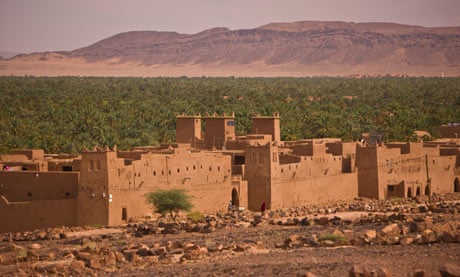
Draa valley, Morocco
Morocco has become such a popular family destination that virtually every major travel company now offers some variation on an Atlas mountains or desert adventure, but these two caught our eye.

KE Adventure is a trekking specialist that has started to offer family trips in recent years. Its family trek, Les Petits Caravaniers, starts in the Draa valley, and travels in camel convoy on the edge of the Sahara, across sand dunes and along ridges, and camping out at night, for four days.

The group walks for up to five hours each day but there are plenty of stops to explore the desert, examine the rock art and search for fossils. Equipment is carried by camel and kids can also hitch a ride, which should keep cries of "I'm tired..." to a minimum. The trip ends with a free day in Marrakech.

Unusually, the trip is bilingual, so your kids will mix with French kids and (whisper it) may even pick up some vocab.

If group travel is not your thing, take a look at Tourdust, a small, independent travel company specialising in adventure travel. It describes its Marrakech and Mountains trip, as "an adult holiday that children will enjoy", pointing out that the accommodation is not specifically aimed at families and swimming pools may be unattended. Starting in Marrakech, you transfer to Imlil in the Atlas mountains where you begin a three-day trek, walking four to five hours a day and staying overnight in Berber villages. Instead of camels, the trip is accompanied by mules, which the children can ride too. There are two full days in Marrakech at the end of the trip.

Orange juice seller, Djemaa el Fna, Marrakech 
 Orange juice seller, Djemaa el Fna, Marrakech. Photograph: Alamy
KE Adventure: Departures October 12 and 26. The trip costs £475 per person and includes airport transfers, guide, most meals, HOTEL ACCOMMODATION and camping equipment. The desert landscape is often stark. If you crave greenery, or the sea, try their other Morocco adventures which include surf lessons and coastal camping.

Tourdust: £442 land only or £537 with flights, including transfers, B&B accommodation in .Marrakech, tour guide while trekking, all meals while trekking

Christmas shopping Marrakech-style


Winter sun and shopping in Morocco, affordable weekend breaks and three of the best UK winter ice rinksA western woman tourist buying shoes at Marrakesh souk, shoe shop, Morocco.

Take me there

Why do battle with Christmas crowds on the high street when you could be picking up exotic handmade gifts in the medieval souks of balmy Marrakech? Tour operator Specialist Morocco (020 7193 2461; specialistmorocco.com) has put together a shopping package for £299pp which includes three nights' half-board accommodation in the Riad Africa and the services of a personal shopper who'll help you navigate the labyrinthine medina. After a hard day's haggling for slippers, lanterns and spices, return to the riad for a massage in the hammam or soak up some winter sun on the roof terrace. Easyjet has return Gatwick-Marrakech flights from £62.

Travel clinic

The dilemma I've been with my girlfriend for three months and want to take her away for a weekend. She's dropped hints about Babington House, but this is way out of my price range. James, Farnborough
Ah, the first mini-break: few romantic milestones are more loaded with the potential for heartbreak. Rather than blowing the budget on a posh country house, play it low key. There are some great new country inns which offer all the style and service of a five-star hotel but without the stuffiness or the price tag. A room in Babington will set you back at least £300, but at the Archangel (archangelfrome.com) in nearby Frome you'll get similar flair and attention to detail – think funky wall murals, zinc roll-top baths and top-notch toiletries – for a third of the price (doubles from £120). A lively programme of music and cocktail nights attracts a young crowd, and the food is fabulous. In Wiltshire the Beckford Arms (beckfordarms.com) offers even better value, with rooms from £95. It's co-owned by a former director of Babington (the next best thing to staying there, surely?), so you'll get the trademark blend of laid-back cool and gorgeous country setting and still have funds left to splash out on a bottle of champagne.
If you have a travel dilemma, email Joanne O'Connor atmagazine@observer.co.uk. For more travel suggestions, go toguardian.co.uk/travel

Three of the best: UK winter ice rinks

The run-up to Christmas wouldn't be complete without the chance to cut a dash (or show yourself up) at an open-air ice rink. Here are three in the most memorable locations
1. Royal Pavilion, BrightonIncomparable Regency backdrop. Mulled wine and fondue at the Alpine café. Adults £9.50, children £6.50. Until 22 Jan (royalpavilionicerink.co.uk)
2. East Princes Street Gardens, Edinburgh One of Europe's largest open-air rinks. Live entertainment, too. Adults £8.50, children £6. Until 4 Jan (edinburghschristmas.com)
3. Somerset House, London Club nights, cocktails, champagne on ice: skating doesn't get sexier than this. From £7.50. Until 22 Jan (somersethouse.org.uk/ice-rink)


Top riad in Marrakech

Riad WO

The design vibe at WO combines traditional Marrakech interiors of cool plaster and tadelakt with a clever riff on pisé techniques more traditional to the countryside. WO feels curiously removed from city life – it’s almost as if you’re out in glamorous La Palmeraie or tucked away in the countryside, despite the fact that Djemaa-el Fna square is less than five minutes away. All five rooms are spacious and uncluttered, with simple platform beds and cool grass mats underfoot. An expansive lounge has deep sofas, a dining area and a vast fireplace, but the piece de resistance is the galleried outdoor chillout zone with its L-shaped pool.

Top riad in Marrakech

Dar Zamzam

Dar Zamzam, MarrakechThis former fortune teller’s house, in the north medina, is a luxury boutique in the truest sense. The seven-room, family-friendly riad has been lavishly decorated in soothing tones of pistachio and peach tadelakt, layered with rich Moroccan silks and embroidery, and dotted with brass lanterns by celebrated designer Yahya, who supplies various royal houses and Hollywood A-listers. The food is fabulous too – try a breakfast of Berber porridge (spiced, cooked grains with dried fruit and honey), shakshuka and yogurt with nuts and cinnamon, or the rooftop barbecues. Don’t miss a trip to the pint-sized spa for traditional Moroccan beauty treatments and facials. 
• Doubles from €110 B&B, +212 661 215 062, riadzamzam.com


Top riad in Marrakech

Dar 18

Dar 18, MarrakechThis artist’s lair is part gallery, part workspace and part exhibition room, and occasional guesthouse for like-minded souls who want to immerse themselves in Marrakech’s creative hub. Run by photographer Laila Hida, it has a dynamic atmosphere, with everyone from Magnum photographers to local, up-and-coming street artists zipping in to work on their latest project, or to talk shop over coffee or mint tea in the courtyard. Pressed, concrete tiles in geometric patterns cover the floors; the three rooms are simple but inspiring spaces for a working getaway.
• Doubles from £45 B&B, +212 524 389 864, facebook.com/dardixhuit


Top riad in Marrakech


Le Coq Berbère

Coq Berbère
When Elisabetta Caracciolo came to Marrakech to buy a riad eight years ago, she was seduced by a terrible house with no stairs and a gigantic hole in the roof. There were, however, extraordinary views of the Koutoubia minaret. She bought it, and although the renovation took four years, she now finds herself at the heart of Riad Laaroussa – the hottest spot in the medina for new restaurants and boutique-souk shopping. The house makes a calming retreat from the mayhem, with simple bejmat floors (matt terracotta tiles), cream wicker furniture arranged around a teeny-tiny plunge pool, and a plush Moroccan lounge tucked beneath the arches. Three doubles and three triples are comfortable and unfussy rooms, but the real lure is a series of roof terraces, where you can take it all in without leaving the lounger.
• Doubles from €55 B&B, +212 524 384 057, marrakechriad.info

Top riad in Marrakech

Riad Edward

Riyad Edward, MarrakechOne of the city’s grooviest hotels, Riad Edward has a lived-in, clubby air, one that immediately makes you feel you belong. A deep, teal-blue pool occupies most of the courtyard, with daybeds scattered casually around, while easy-listening numbers fill the air; at night, candlelit lanterns flicker from every surface. The 10 rooms are an eclectic mix of styles, ranging from the vast Douiria suite, with its eye-boggling carved wood ceiling, to the light-filled Studio Room, which has an entrance flanked by Berber totems, a canopied bed, and disco mirror tiles around the fireplace. There’s a dramatic dining room, with a table to seat 38. The food is excellent, and available round the clock.

• Doubles from €75 B&B, +212 524 389 797, riyadedward.com

Top riad in Marrakech

Riad Honey

Riad Honey, Marrakech
The South Medina is a relatively undiscovered, undeveloped neighbourhood, but the pretty red passageway planted with roses that hides this cute little guesthouse suggests it could be on the up. Opened in 2007, the intimate, red tadelakt courtyard, with its black-tiled paddling pool, makes for a dramatic entrance. You’ll find the eight rooms rather more sedate. The best has a four-poster bed, with crisp, embroidered linen, creamy walls and cool, tiled bathrooms. The shady, lushly planted roof terrace is a fantastic spot for breakfast. Mainly, though, this is a great jumping-off point if you’re heading for the Sahara, as the road south is practically on the doorstep.
• Doubles from €100 B&B, +212 524 38 69 81, riad-honey.com

Top riad in Marrakech


Riad Rbaa LaroubRiad Rbaa Laroub, Marrakech


This riad is named after a stopped clock (r’baa laroub means quarter to four) that French owner Jean-Noël Schoeffer gave pride of place to in the main courtyard 15 years ago, and hasn’t moved since. The polished terracotta-tiled space is filled with antiques and curios, and a gaggle of return guests who’ve been passing through for years. More home than hotel, it has seven individually decorated rooms, enriched with painted wood ceilings, black and yellow floor tiles, and antique embroidered bed linen, while the jungle-like roof terrace is a haven of secret corners to hide away in. On cold days breakfast is served in the dining room, but most guests gather around the kitchen table instead.
• Doubles from €75 B&B, +212 524 390 716, darrbaalaroub.com


Top riad in Marrakech

Riad Al Jazira


Riad Al Jazira, Marrakech
Not many medina hotels are big enough to have a courtyard swimming pool but Al Jazira is one of them. Enclosed within cool, plaster columns, the pool forms the focal point of this sprawling, 17th-century property, which consists of three houses knocked into one, with an unusually minimalist decor. Simple white furnishings, potted paddle-leaf cacti and the odd contemporary artwork allow the architecture to speak for itself. The owner, Abdellatif Aït Ben Abdallah, now has several hotels under his belt, as well as the iconic Dar Cherifa literary café and Dar Zellij, one of the best restaurants in town for traditional Moroccan fine dining.
• Doubles from €87 B&B, +212 524 426 463, riad-aljazira.com

Top riad in Marrakech


Riad Tizwa

Riad Tizwa


Tizwa is the kind of place that makes you go “ahh …” the minute you swoosh through the door. Original dove-grey and white tiles cover wraparound balconies draped with white-linen curtains, and scented jasmine cascades down to the courtyard. It’s a great place to curl up on a sofa and do nothing, yet just minutes from the main souks and a short cab ride into the Ville Nouvelle. The five rooms are spacious and comfortable, with some lavish details, such as the ornately carved plaster ceilings in the courtyard room, but it’s the thoughtful touches that make the place: who doesn’t love finding flasks of piping-hot tea and coffee outside their room when they wake up in the morning?
• Doubles from €95 B&B, 07973 115 471, riadtizwa.com


Top riad in Marrakech

Dar Hanane

Dar Hanane, Marrakech, Morocco
Near the Ben Youssef madrasa – the city’s most important Islamic school – this cute, six-room riad is one of the oldest houses in the medina, though you’d never know it. It’s arranged around a central courtyard shaded by bitter-orange trees (for making marmalade). You can sip tea by the fire in the first-floor salon, feast on traditional tagines and couscous in the red dining room, and laze around down in the bhou – a built-in sofa beneath the inglenook-style beams. The in-house chefs, Hanane and Cherifa, host cooking classes (€40pp). Rooms have colourful details – candy-striped easy chairs in the Garden room and turquoise pom-pom blankets in the Berber room – and the rooftop views of the Atlas mountains are sensational. 


The foodie traveller in … Fez, Morocco

Morocco’s third city will play host this winter to a talented chef/sommelier duo from the Paris Popup, who will add their own twist to traditional cuisine and ingredientsSpice market, Fez

If you’re in Fez in the next three months, you’ll be in for a tasty treat if you can score a reservation at Restaurant Numero 7, in the heart of the medina. That’s because this restaurant also functions as a place where international chefs can take a culinary sabbatical and discover Moroccan gastronomy. The invited chefs spend time browsing markets and local produce before reinterpreting Moroccan dishes for diners at the restaurant, in a traditional medina house with contemporary decor.
From next weekend, foodie duo Harry Cummins and Laura Vidal of The Paris Popup will be at the helm. Cummins, a British-born chef, and Vidal, who’s from Montreal and is a well-known sommelier in Paris, met while working at Gregory Marchand’s Paris restaurant, Frenchies. With a mutual love for travel and culinary discovery, they founded Paris Popup last year and have since left their mark on almost every continent, sourcing local products, speaking with producers and putting their new-found knowledge to use in pop-up kitchens.
In Kyoto they found a variety of green tea, hojicha, that tastes like red Burgundy, and paired it with sake soaked in sherry casks and seafood from the local markets.
So what will be on the table in Fez? It’s all about surprise and market finds, but Vidal hopes to experiment with Moroccan herbs and spices to make new vermouths, while Cummins’s talents could reveal a new slant on the tagine or thepastilla cinnamon-coated meat pie – and all will be washed down with the best Moroccan wines.

A Moroccan model for change

Rory MacLean visits a hotel in the High Atlas mountains to see how responsible tourism is bringing benefits to the local community
Kasbah du Toubkal, Morocco
Travellers transform places, for better and for worse. Tourism has ruined miles of Britain and Spain's southern coasts, as well as countless fishing village between Paphos and Ko Samui. At the same time it has revived the fortunes of St. Moritz, Cannes, the Bahamas and, over the last thirty years, many a crumbling Tuscan and Provencal hamlet. We come, we see, we make a place our own.
Although long on the jet-set's radar, Morocco is a latecomer to large-scale tourism. Since the 19th century independent souls have been drawn to north Africa. Flaubert, Matisse and George Orwell were followed in the Sixties by Paul McCartney and John Lennon. Mick Jagger and Keith Richards were photographed by Cecil Beaton beside the pool at the Hotel Es Saadi in Marrakech. Yves Saint Laurent, the Rothschilds and a host of celebs busied themselves house hunting in the Medina. The bohemians, the Beats and the designers - among them Bill Willis, Charles Boccara and Meryanne Loum-Martin - popularised the country, propelling it into our collective conscious and sowing the seeds for its transformation.
Hence parts of old, red Marrakech are today unrecognisable. The Palmeraie has been gentrified. Among its groves at Jnane Tamsna, the original boho-chic Moroccan villa hotel, guests (including of late David Bowie and Brad Pitt) dine on inspiring French, Moroccan and Senegalese dishes. At Vanessa Branson's trendyRiad El Fenn 24 sumptuous rooms are arranged around three mature courtyards, two heated swimming pools and a home cinema. Its rooftop terraces boast one of the finest views of the Medina, towards the Koutoubia mosque and the snow-capped Atlas mountains. At Ministero del Gusto a former Italian Vogue editor and her partner sell glamour and retro furniture from their eclectic art-gallery-cum-design consultancy. Behind myriad Old City doors Morocco's famed artisans are now resurrecting decrepit riads for Paris couturiers and London book editors.
The city continues to seduce visitors with its sunshine, its effortless flair, its palm groves rising from the desert and swallows swooping through the dusk above broad Djemaa el Fna square. In turn, Marrakchis let events unfurl as fate decrees, enjoying the new opportunities, acknowledging foreigners' role in the revitalisation of traditional crafts.
Advertisement
This equitable exchange, so rare in modern tourism, is magnificently illustrated 40 miles out of town at theKasbah du Toubkal.
Beyond Asni, dusty cumin-coloured hills rise above the Mizane Valley. Berbers in hooded, Hobbit-like burnouses work on narrow terraces above the racing, glacial river. Mule paths cut back and forth across the steep upper slopes. The long, winding corridor opens on to a valley of quince, walnut and wild cherry trees ringed with looming, jagged peaks. Sunlight flashes off the ice sheets. Crevices lie deep in snow. Choughs wheel over Imlil village, above which towers Morocco's most spectacular mountain retreat.
As an eager young British climber, Mike McHugo fell in love with the High Atlas. In 1989, he bought the abandoned summer home of a feudal chief and - in a unique partnership with the local community - transformed it into a secluded getaway. From the outset, his priorities have been collaboration and sustainability. All workmen and materials come from the local Berber community, as do its kind and attentive staff. Water is spring-fed, not trucked in bottled. Towels and sheets are changed only when necessary, not every day. Fruit, vegetables and meat are locally-sourced. A five per cent levy added to all guests' accommodation bills has FINANCED the valley's first ambulance and community hammam, as well as supporting the school and enabling local girls to continue their education in Asni.
Guests are truly welcomed with splashes of rose water, then ushered on to the lofty, many-carpeted roof terrace and guided to simple yet stylish bedrooms. Accommodation ranges from traditional Berber salons, which sleep groups of trekkers and extended families, to the beautiful Garden House, a self-contained, double-level sanctuary with two balconies. All the rooms have been decorated with the utmost care, in rich colours and with hand-carved wooden beams (no power tools were used during construction as electricity only reached the valley in 1997). At night, hot water bottles are secreted into beds, open fires lit and the lamps of the surrounding villages glisten like stars fallen to earth.
As well as the sincere hospitality, it is, of course, the mountains that make the Kasbah so special. Walks range from easy ambles to the two-day ascent of Jebel Toubkal - at 4,165 metres the highest peak in north Africa - and are led by personable local guides. Its remote trekking lodge, with solar-powered under-floor heating and en suite bedrooms, allows guests to stay in comfort even higher in the Toubkal Massif.
"I imagine a project like the Kasbah would not be possible without close and deep local ties", said McHugo recently. "I also believe that by our correct behaviour and respect for the local population, hopefully they have come to respect us and also accept some of our differences."
Travel opens new horizons, for traveller and host alike. Without tourism Imlil would be a poorer place, its Kasbah still a ruin, its girls denied the chance to attend high school, its entire population reliant on subsistence agriculture. The Kasbah du Toubkal has set a standard for responsible, collaborative tourism that is a positive force for change in the region.

Getting there

Double rooms at Kasbah du Toubkal from €160 (£129) B&B (minimum two-night stay), kasbahdutoubkal.com
Easyjet fly from London to Marrakech from about £115 one way
· Rory MacLean's latest book Magic Bus: On the Hippie Trail from Istanbul to Indiais published by Penguin. His UK top tens Stalin's Nose and Under the Dragon are republished by IB Tauris this month.